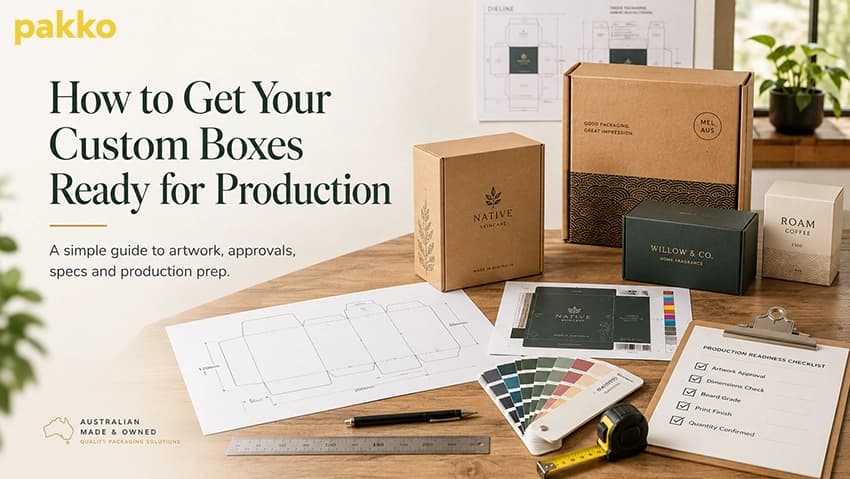
Packaging artwork can feel like the final step in a project, but in reality, it is one of the most important parts of getting your custom boxes made properly.
A beautiful design is only one part of the process. For packaging to print, cut, fold and assemble the way it should, the artwork needs to be prepared with production in mind. That means the file needs to match the keyline, colours need to be set up correctly, fonts and images need to be ready, and all important details need to sit safely away from cut and fold areas.
At Pakko, we see packaging from both sides. We understand the creative excitement of seeing a box come to life, but we also understand the practical details that make production run smoothly. A small artwork issue can hold up a job, change the final look of a print, or create confusion at proofing stage.
The good news is that most artwork issues can be avoided with a simple checklist which can we found here: https://www.pakko.com.au/learning-hub/design-guide
The keyline is the foundation of your packaging artwork. It shows the shape, size, folds, cuts, glue areas and panels of your box. Before any design is added, it is important to make sure you are working on the correct keyline for the final approved box size and style.
This is especially important for custom packaging because every panel has a purpose. A mailer box, shipping carton, candle box, sleeve, tray or insert will each have different folding areas, print areas and structural requirements.
When artwork is built on an old keyline, an adjusted dieline, or a file that does not match the approved quote, it can create delays. The design may need to be moved, resized or rebuilt before production can continue.
A good rule is simple: do not start final artwork until the box structure, size and material have been confirmed.
Packaging is not flat once it is finished. It folds, wraps, locks, creases and sometimes glues together. That means artwork needs to be designed with movement in mind.
Logos, product names, barcodes, ingredient panels, QR codes and important messaging should not sit too close to cut lines, fold lines or edges. Even with careful production, packaging materials can shift slightly during printing and conversion, so safe spacing helps protect the final result.
This is especially important for detailed retail packaging where the front panel needs to feel balanced, clean and easy to read. A design may look perfect on screen, but once folded, a logo placed too close to a crease can look cramped or misaligned.
When in doubt, give your design room to breathe.
Bleed is the extra artwork that extends beyond the final cut edge. It helps prevent thin white edges from appearing if the material moves slightly during cutting.
For packaging, bleed matters because boxes are not trimmed like a simple flyer or business card. They are printed, cut, creased and formed into a three-dimensional product. Any background colour, image or pattern that reaches the edge of a panel should extend past the cut line.
Without bleed, even a strong design can look unfinished once the box is cut.
This is one of the most common artwork issues we see, and it is also one of the easiest to fix before proofing.
Colours on a screen do not always print the same way on cardboard, artboard or specialty board. Screens use light, while printing uses ink. This is why packaging artwork should be prepared in CMYK rather than RGB.
CMYK gives a more realistic setup for print production and helps reduce unexpected colour shifts. It is also important to consider the material being printed on. A colour printed on white board may look brighter than the same colour printed on kraft or uncoated stock.
If brand colour consistency is critical, it is worth discussing this early. Some colours may need extra consideration depending on the print method, board type and finish selected.
Packaging is physical, so colour should always be considered together with material.
Low-resolution images can look fine on screen but appear blurry or soft once printed. This can affect product photos, textures, icons, illustrations and background patterns.
Before sending artwork through, check that images are high enough quality for print and are not being stretched beyond their original size. Vector artwork is usually best for logos, icons, patterns and line work because it can scale cleanly without losing quality.
This small step can make a big difference to how polished your packaging feels when it arrives.
Missing fonts and missing links can stop artwork from being checked properly. If a font is not embedded, supplied or outlined, it may change when the file is opened by someone else. If an image link is missing, part of the artwork may not display correctly.
Before submitting your file, check that fonts, images and linked assets are either embedded or supplied correctly. This helps the pre-press team review the file accurately and reduces back-and-forth.
It also protects the design you approved, so what is checked is actually what you intended to print.
Not every part of a packaging keyline is visible once the box is assembled. Some areas fold inside the box, some lock into place, and some are used for glue.
Glue areas need special care because ink or heavy coverage in these sections can affect how well the box adheres. Hidden panels also need to be considered so you are not spending design time or print coverage on areas the customer will never see.
This is where packaging design is different from general graphic design. The artwork needs to look good, but it also needs to respect how the box is made.
The board you choose will influence the final print result. A coated board, uncoated board, kraft board, corrugated board or fibreboard can each change how colours, textures and finishes appear.
For example, a soft neutral design may look beautiful on kraft, while a bright full-colour design may need a different surface to achieve the best result. A premium finish such as foiling, matte cello, gloss, spot UV, embossing or debossing also needs to be considered before artwork is finalised, not after.
The best packaging designs are created with the material in mind from the beginning. We have a page dedicated to the types if materials we offer: https://www.pakko.com.au/learning-hub/type-of-materials-we-offer
Before artwork is approved, take a moment to check the small things that can become big problems later.
Is the barcode correct and scannable? Is the product name spelled correctly? Are ingredients, warnings, batch details or compliance statements accurate? Are social handles, website addresses and QR codes working? Is the box orientation correct? Does the front panel sit where the front panel should be?
Packaging often carries important business, product and customer information. Once it is printed, these details are not easy to change.
Proofing should never be rushed.
You do not need to be a packaging expert to create great packaging. That is what our team is here for.
If you are unsure whether your artwork is press-ready, whether your keyline is correct, or whether your design will work well on the material you have chosen, it is better to ask early. Small adjustments at the beginning can save time, reduce stress and help your packaging move through production more smoothly.
At Pakko, we work with businesses at different stages of the packaging process. Some come to us with finished artwork. Some have a logo and a rough idea. Others know exactly what they want their product to feel like, but need guidance turning that into a real box.
Wherever you are starting from, the goal is the same: packaging that protects your product, represents your brand, and is ready to be made properly.
Good packaging does not happen by accident. It comes from the right structure, the right material, the right print method and artwork that has been prepared with care.
A clear artwork checklist helps remove uncertainty from the process. It gives your designer, packaging manufacturer and production team the best chance of getting things right the first time.
Because when your artwork is ready, your packaging can move with confidence from screen to sample, and from sample to finished box.