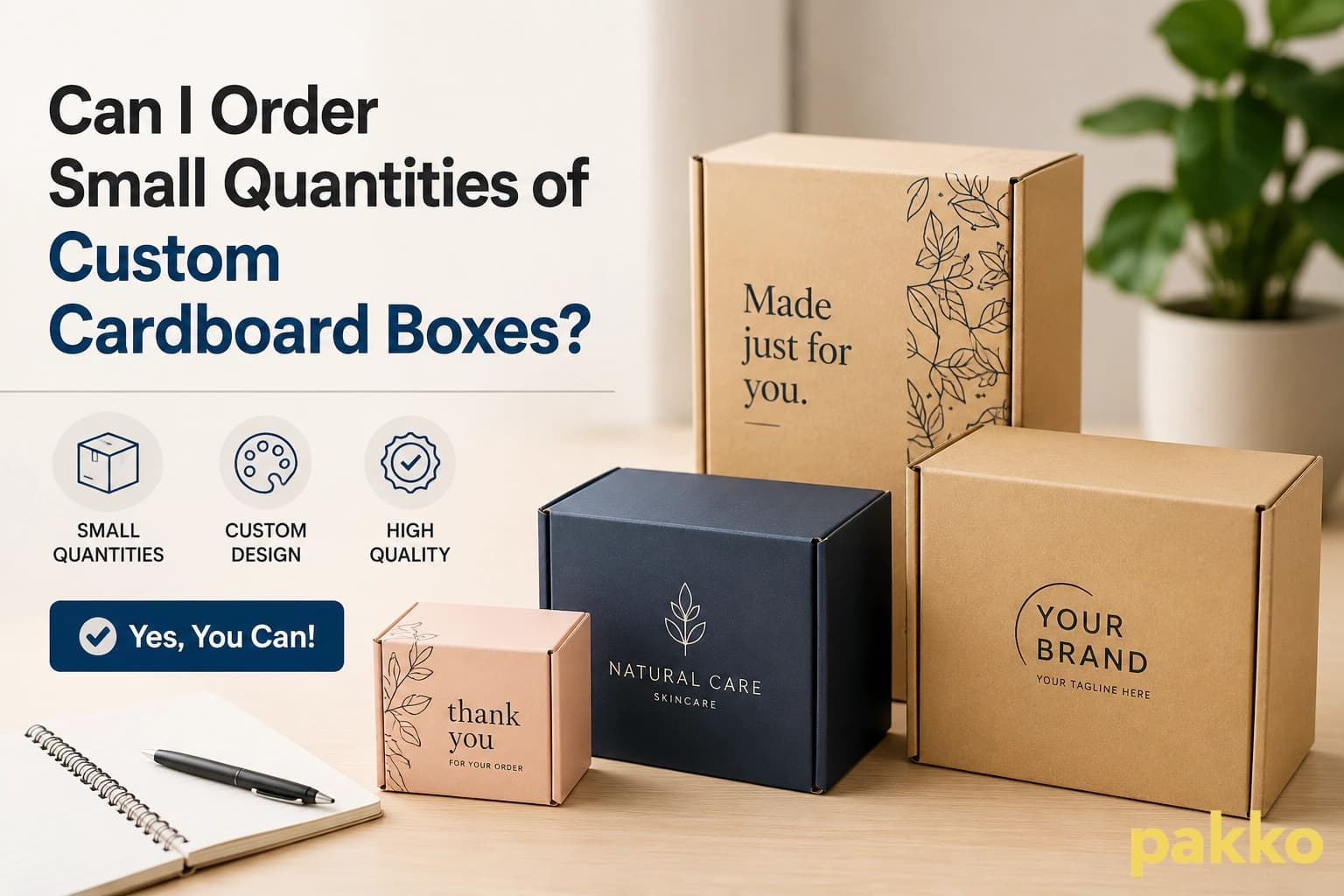
For many businesses, investing in custom cardboard packaging can feel like a big commitment. Start-ups, new product launches and growing ecommerce brands often ask the same question before anything else: can I order a small quantity, or do I need to buy thousands of boxes?
The good news is that small quantity custom packaging is possible. The better question is understanding what ‘small’ means, what influences minimum order quantities and how to make sure your order still delivers value.
Every custom box begins with preparation before production even starts. Artwork needs to be checked, manufacturing files prepared, board selected, machinery set up and quality checks completed. These setup processes are largely the same whether you produce one hundred boxes or ten thousand.
Because of this, manufacturers generally have minimum order quantities that make production commercially viable. The minimum isn’t there to make ordering difficult. It exists because there is a fixed amount of work involved before the first sheet of cardboard is produced.
Advances in digital printing and modern manufacturing have made smaller production runs more achievable than they once were. This is particularly valuable for businesses testing new products, launching seasonal promotions or validating a new brand before committing to larger volumes.
While the unit price is usually higher on a small run than on a larger order, many businesses find the flexibility worthwhile because it reduces upfront investment and allows them to refine their packaging before scaling.
Ordering a smaller quantity is often a smart decision if you are launching a new product, trialling new branding, validating market demand, attending trade shows or introducing limited edition packaging.
Rather than filling your warehouse with packaging you may later change, a smaller order allows you to gather customer feedback and make improvements before placing a larger production run.
Although a smaller order reduces your initial spend, it doesn’t always reduce your cost per box. Setup costs are spread across fewer units, meaning each individual box will generally cost more.
However, focusing only on the unit price can be misleading. Ordering fewer boxes can improve cash flow, reduce storage costs and minimise the risk of carrying obsolete packaging if your branding or product changes.
The best decision depends on your stage of business, available storage, sales forecasts and future plans.
A good packaging manufacturer will help you choose the most practical solution rather than simply quoting the lowest possible price. They can recommend board grades, print methods and manufacturing options that suit both your budget and your expected order volumes.
At Pakko, every project starts with understanding what the packaging needs to achieve. Sometimes a smaller production run is the right answer. Other times, increasing the quantity slightly can significantly reduce the overall cost per box. Having that conversation early helps you make a more informed decision.
Final thoughts
Yes, you can order small quantities of custom cardboard boxes. The key is understanding how minimum order quantities affect pricing, production and long-term value. Choosing the right quantity isn’t simply about buying the fewest boxes possible. It’s about balancing cost, flexibility, cash flow and future growth.
Whether you’re launching your first product or expanding an existing range, well-designed packaging should support your business today while giving you room to grow tomorrow.
Can I order custom boxes for a new product launch?
Yes. Small production runs are often ideal for product launches because they allow you to test the market before committing to larger quantities.
Why is the price per box higher on smaller orders?
Most production setup costs remain the same regardless of quantity. Those costs are spread across fewer boxes, increasing the unit price.
Should I order more boxes to save money?
Only if it makes sense for your business. Larger orders can reduce the unit price, but storage, cash flow and future branding changes should also be considered.