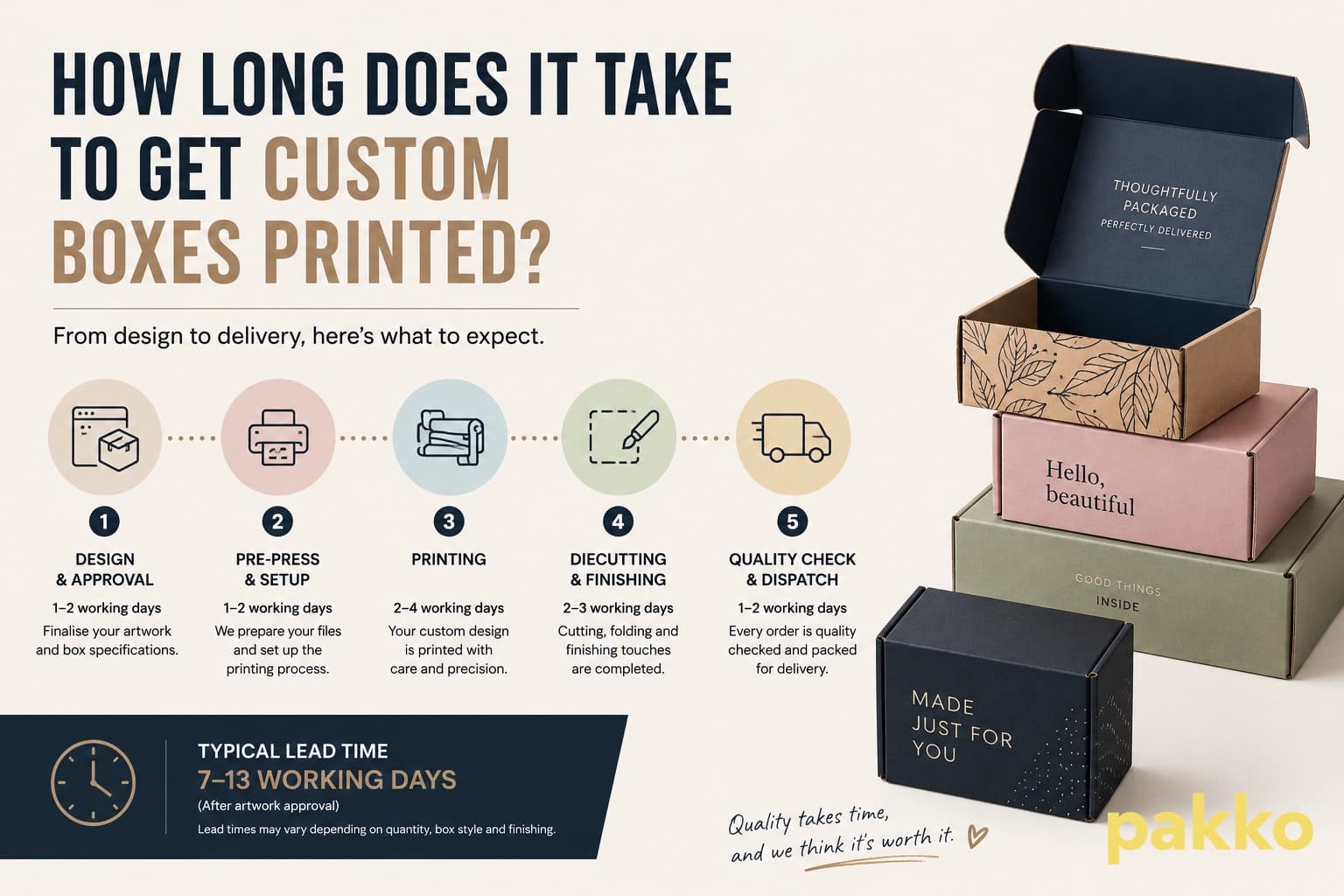
When you are planning a product launch, restock, promotion or new range, packaging timing matters. The box is often one of the last things people think about, but it is also one of the things that can hold everything up if it is not planned early enough.
For most custom cardboard packaging, turnaround time depends on more than just printing. Before a box is produced, there may be sizing, structural design, artwork setup, material availability, sampling, approval, printing, cutting, gluing, finishing and delivery to consider. A simple printed box can move through production faster than a complex box with multiple finishes, but every job still needs to be checked properly before it goes into manufacturing.
At Pakko, we generally guide customers around a practical production timeline once the sample and artwork are approved. The important part is understanding that the clock usually starts after the details are confirmed, not from the first enquiry.
Custom printed cardboard boxes are made to suit your product, your artwork and your requirements. Unlike stock boxes, they are not sitting on a shelf waiting to be dispatched. They need to be planned and manufactured.
The process starts with understanding the box size, the board type, the quantity, the print method and whether any finishing is required. If the packaging needs a new dieline, new forme, print setup or physical sample, that needs to happen before production can begin.
This is why two customers asking for custom boxes can have very different timelines. One business may already have approved artwork and a repeat order ready to go. Another may still be finalising product dimensions, brand colours and the box structure. Both are custom packaging orders, but they are at very different stages.
One of the most common delays in custom box printing is artwork. Even when the box size has been confirmed, the artwork still needs to be supplied in the correct format, checked against the dieline and approved before the job can move forward.
If the artwork is not set up correctly, the production team may need to request changes. This can include issues with bleed, fonts, image resolution, colour setup, logo placement or artwork sitting outside the safe print area.
For businesses that want their printed boxes produced quickly, preparing artwork early makes a big difference. The smoother the artwork approval stage, the easier it is to move into production without unnecessary back and forth.
A good packaging supplier will not rush artwork into production if there is a clear issue. It is better to catch a problem before printing than to discover it after the boxes have been made.
Sampling and approval can add time, but it protects the final result
For new custom packaging, a sample can be an important part of the process. It allows you to check the size, structure and fit before committing to the full production run.
This is especially helpful when the product is fragile, unusually shaped, heavy, premium, or needs to sit in the box a certain way. A sample gives you something physical to test. You can check how the product fits, how the box opens, how it feels in hand and whether any changes are needed before production.
Sampling can add time at the start, but it often saves time overall because it reduces the risk of mistakes. If a box goes into production without proper approval and something is wrong, the delay and cost can be far greater than taking the time to check it properly upfront.
The type of cardboard or board required can also affect timing. Some board types and colours may be more readily available than others. If a particular material needs to be ordered in, or if the job requires a specific grade or finish, this can influence the overall timeline.
For many businesses, flexibility around material can help keep the job moving. For example, if the priority is speed and cost efficiency, the packaging manufacturer may be able to suggest a suitable board that is practical and available, rather than waiting on a harder to source option.
This does not mean choosing the wrong material just to save time. The board still needs to suit the product and purpose. But being open to practical alternatives can help avoid delays.
A plain cardboard box will usually move faster than a highly finished retail box. Once you add full colour print, foiling, spot UV, embossing, debossing, celloing or litho laminating, there are additional steps involved.
Premium finishes can create a beautiful result, but they need to be planned properly. Each extra finish can require separate setup, additional production handling and quality checks. If your product launch depends on a firm delivery date, it is important to allow enough time for these finishes rather than adding them at the last minute.
For some projects, a simpler printed design may be the better choice if timing is tight. For others, the premium finish may be worth the extra time because the packaging plays a major role in the customer experience or retail presentation.
Repeat orders are usually faster than new jobs
If you have already ordered the same custom box before, the process can be faster because the structure, artwork and production requirements are already known. A repeat order does not usually need the same level of setup as a brand new custom packaging project.
That said, repeat orders still need to be scheduled into production and may still depend on board availability, machine capacity and delivery timing. It is always better to reorder before you are completely out of stock.
For businesses that use packaging regularly, keeping an eye on stock levels is important. Waiting until the last box is used can create stress across packing, dispatch and customer orders.
As a general rule, the earlier you can start the conversation, the better. If you are launching a new product or changing your packaging, do not wait until everything else is ready before thinking about the box.
Packaging can influence product presentation, freight, storage and packing speed, so it should be part of the planning process early. Even if you are not ready to order, getting advice on size, board and structure can help you avoid problems later.
For a new custom printed box, allow time for quoting, artwork, sampling, approval, production and delivery. If you have a firm deadline, tell your packaging supplier early so they can advise what is realistic.
The most common delays come from incomplete information. This can include missing product dimensions, unclear quantities, unfinished artwork, late changes, unavailable board, unapproved samples or uncertainty around print finishes.
Changing the size or artwork after approval can also delay production. Once a job is prepared for manufacturing, changes may affect the dieline, print setup, material usage and scheduling.
To keep things moving, it helps to have the product measurements, quantity, artwork files, delivery details and any brand requirements ready when requesting a quote.
If timing is important, be clear from the beginning. Let the packaging team know your required delivery date and whether the job is linked to a launch, event, campaign or stock deadline.
Provide accurate product dimensions, confirm the quantity, supply artwork early and respond quickly to approvals. If a physical sample is needed, check it as soon as possible and provide clear feedback.
It also helps to stay practical. If you need packaging quickly, consider whether the structure can be simplified, whether the print can be kept clean, or whether premium finishes can be saved for a future run.
The timeline depends on the job. A repeat printed box with approved artwork may move faster than a new custom design that requires sampling, artwork setup and premium finishes.
The most important thing to remember is that production lead time usually begins once the artwork, sample and specifications are approved. The earlier you prepare those details, the smoother the process will be.
At Pakko, we help businesses across Brisbane and Australia create custom printed cardboard boxes with practical guidance from quote through to production. Whether you need plain cartons, branded ecommerce packaging or premium printed boxes, good planning helps make the process smoother, clearer and less stressful.
FAQ
How long does custom box production usually take?
Custom box production time depends on the size, quantity, board type, print requirements, finishing and whether the job is new or a repeat order. For new jobs, timing also depends on how quickly artwork and samples are approved.
Does the lead time start when I request a quote?
Usually no. Production lead time generally starts once the quote is approved, artwork is supplied and checked, samples or specifications are approved, and the job is ready to move into manufacturing.
Can I speed up my custom box order?
You can help speed up the process by providing accurate measurements, clear artwork files, confirmed quantities and quick approvals. Keeping the design practical and avoiding late changes can also help reduce delays.
Need custom printed boxes for an upcoming launch or restock? Speak with Pakko early so we can help you plan the right packaging and timeline. Contact us (07) 3265 7188 or via email - Sales@pakko.com.au