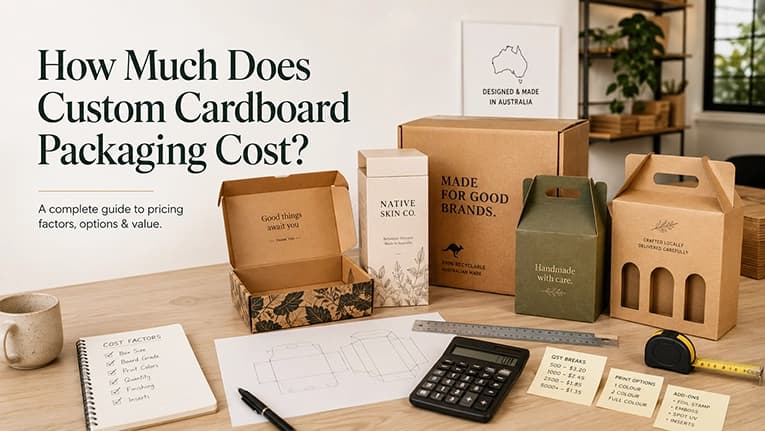
When a business starts looking at custom cardboard packaging, one of the first questions is usually around cost. It makes sense. Packaging is not just something that holds a product. It affects freight, storage, presentation, customer experience and the way your brand is perceived before the product is even opened.
The difficult part is that custom cardboard packaging does not have one fixed price. The cost depends on what you are making, how it is being printed, the board grade required, the quantity ordered and the level of finishing involved. A simple plain shipping carton will be priced very differently to a full colour retail box with foiling, embossing or a premium finish.
At Pakko, we speak with many businesses who are trying to work out whether custom packaging is worth the investment. The answer usually depends on what the packaging needs to do. If it only needs to protect the product during freight, the focus should be on strength, fit and cost efficiency. If it needs to sit on a retail shelf, support a product launch or create a strong unboxing experience, then design, print quality and finishing become more important.
Understanding what affects the price can help you make better decisions before you request a quote.
The first major factor is the size of the box. A larger box generally uses more board, takes up more space on the sheet and may affect how efficiently it can be manufactured. Even a small change in size can sometimes make a difference to the way the box is laid out for production.
This is why it is important to get the dimensions right from the beginning. A box that is too large may cost more than it needs to and can increase freight costs. A box that is too tight may not protect the product properly or may be difficult to pack. The most cost effective packaging is usually the packaging that fits the product properly, without unnecessary empty space.
The second factor is the type of cardboard or board being used. Not every product needs the same material. Some products only need a lightweight carton, while others need a stronger corrugated board to handle shipping, stacking or storage. The right board choice depends on the weight of the product, how it will be handled, whether it will be shipped individually or in bulk, and how much protection is required.
Choosing the cheapest board is not always the cheapest outcome. If the packaging fails in transit, the cost of damaged product, rework and customer complaints can be much higher than choosing the right material in the first place.
Print is another key part of custom packaging pricing. A plain box will usually be more cost effective than a printed box because there are fewer production steps involved. Once you add branding, artwork or colour, the job becomes more detailed.
Full colour printing can create a strong brand presence, especially for ecommerce, retail, beauty, food, beverage and product based businesses. However, the more coverage, detail and print requirements involved, the more the cost can change.
This does not mean every custom box needs to be heavily printed. Sometimes a simple logo, clean layout and strong structural design can be more effective than covering every panel. Good packaging is not always about doing more. It is about knowing what matters most to the customer when they receive or see the product.
For businesses working within a budget, it may be better to keep the structure strong and the print clean, rather than adding too many design features at once.
Premium finishes such as foiling, spot UV, embossing, debossing, celloing and litho laminating can change the look and feel of packaging significantly. They can also increase the cost because they involve additional production steps, materials and setup.
These finishes are often worth considering when the packaging plays a major role in the sale. For example, a luxury product box, gift packaging or retail display box may benefit from a foil logo or embossed detail because it helps create a stronger first impression.
For everyday shipping cartons or internal packaging, premium finishes may not be necessary. The better question is not whether a finish looks good. It is whether it adds value to the product, supports the brand and makes sense for the way the packaging will be used.
Order quantity has a big impact on the unit price of custom cardboard packaging. Smaller runs can be helpful when testing a new product, launching a new range or ordering packaging for a limited campaign. However, the unit cost is often higher because setup, design checks and production preparation still need to happen.
Larger quantities usually bring the unit price down because the setup cost is spread across more boxes. This is why it is important to think about how much packaging you realistically need over a period of time.
That said, ordering too much packaging can create storage issues, especially if the box design, product size or branding may change. The goal is to find the right balance between price, storage and business flexibility.
A good packaging manufacturer should be able to guide you on what quantity makes sense based on your product, budget and usage.
When comparing quotes, it is important to look beyond the unit price. The cheapest quote is not always the best value if it does not include the right material, correct sizing, artwork checks, reliable production, quality control or local support.
Custom packaging has to work in the real world. It needs to be packed efficiently, protect the product, arrive in good condition and represent your brand properly. If the packaging creates problems during production, fulfilment or delivery, the cost shows up somewhere else in the business.
This is where working with a local cardboard packaging manufacturer can make a real difference. Being able to discuss the structure, material, print finish and production method with a team who understands manufacturing helps reduce mistakes and gives you more confidence before you go into production.
The best way to control packaging costs is to be clear about what the box needs to achieve. Before requesting a quote, think about the product size, product weight, how it will be shipped, whether it needs to be retail ready, whether it needs full colour print and whether any premium finishes are essential.
It also helps to provide artwork early, or at least a clear idea of the branding requirements. This allows the packaging team to understand what is practical, what may affect price and where adjustments can be made before production.
Sometimes the most cost effective solution is not the most basic box. It may be a smarter structure that reduces board waste, improves packing speed or lowers freight costs. A well designed box can save money beyond the initial packaging order.
The honest answer is that it depends on the size, material, quantity, print and finish. A plain shipping carton will sit at a different price point to a printed retail box or a premium foiled presentation carton.
The best starting point is to understand what your packaging needs to do, then work backwards from there. If your packaging needs to protect the product, keep the structure and material at the centre of the decision. If it needs to sell the product, then print quality, design and finishing may deserve more attention.
At Pakko, we help businesses across Brisbane and Australia wide create custom cardboard packaging that is practical, well made and suited to the way their products are sold, shipped and received. Whether you need plain cardboard boxes, printed packaging or a more premium finish, the right quote should give you clarity, not confusion.
If you want to get a ball park cost, check out on Free estimating system to get an instant quote. https://quote.pakko.com.au/
1. Why does custom cardboard packaging cost more than stock boxes?
Custom cardboard packaging is made to suit your product, brand and requirements. This can involve structural design, custom sizing, artwork setup, print production and specific material choices. Stock boxes are made in large volumes and in standard sizes, which is why they are usually cheaper, but they may not fit or present your product as well.
Can I reduce the cost of custom packaging?
Yes. You can often reduce costs by choosing a practical box size, keeping the print design simple, ordering a suitable quantity and only using premium finishes where they add real value. A packaging manufacturer can also suggest ways to improve efficiency without taking away from the final result.
Is printed packaging worth the investment?
Printed packaging can be worth it when it supports your brand, improves presentation or creates a better customer experience. For ecommerce and retail businesses, the box is often part of the first impression. The key is to choose a print style that matches your product, budget and customer expectations.